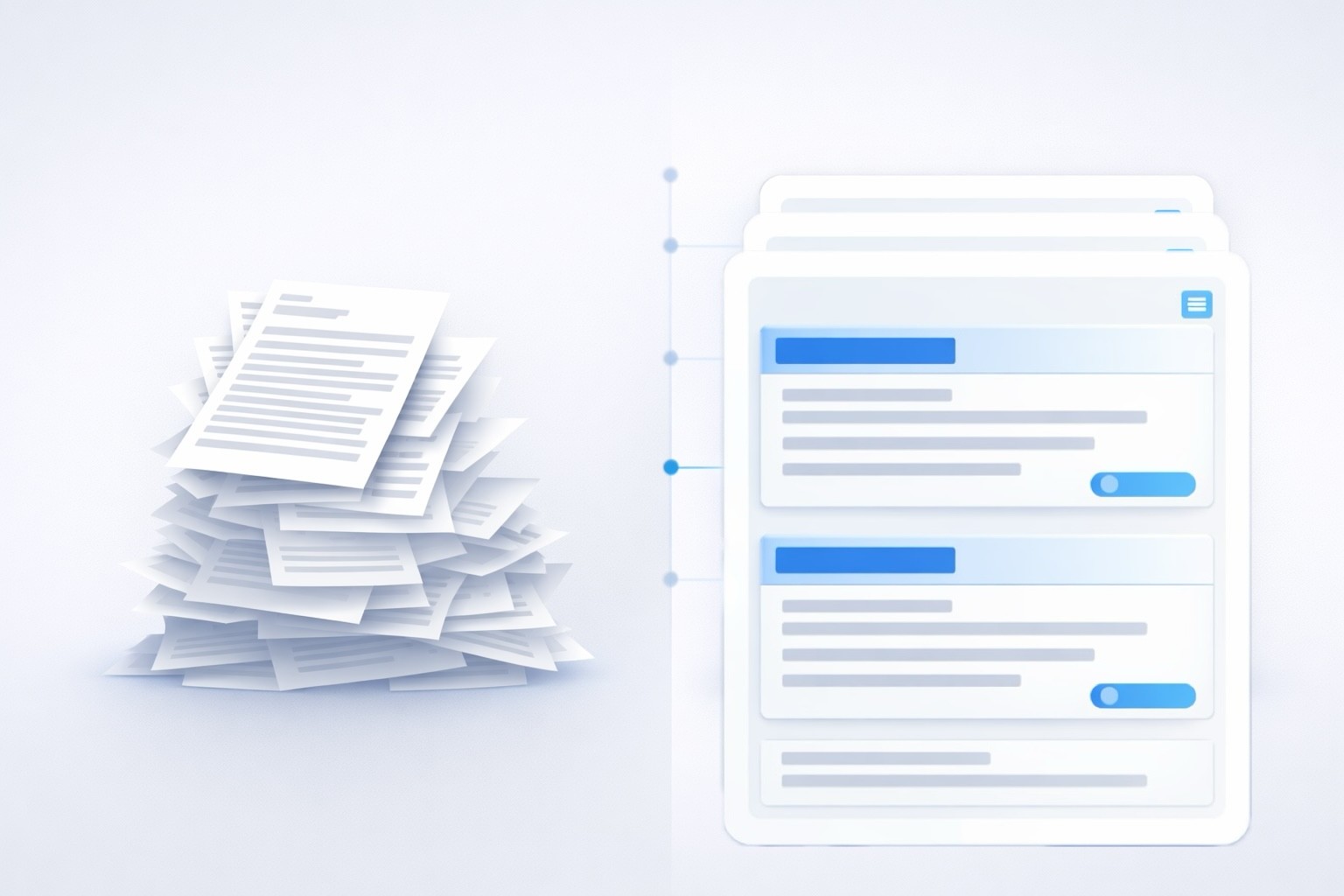
Illustrative example: encounter-based notes accumulate as separate documents, while Stream builds a living, problem-based record across visits.
OpenEvidence Scribe offers free AI-generated notes, while Stream is built for clinicians who want structured, longitudinal documentation without trading control or context.
Stream
Clinicians in independent or small-group practices deciding between a free AI scribe and a purpose-built documentation system designed for continuity of care.
Open Evidence
Clinicians looking for a no-cost, single-visit AI scribe and who are less concerned about longitudinal structure, data ownership, or cross-visit context.
Stream treats documentation as a living clinical record. Notes are organized by medical problem, persist over time, and intentionally carry forward relevant context to support ongoing care—not just today’s encounter.
OpenEvidence Scribe focuses on generating a complete note from a single encounter. Each note stands alone, optimized for speed and accessibility rather than long-term structure or continuity.

Feature & Pricing Comparison
Features
Stream
Open Evidence
Problem-Based Context & Review
No; everything is stored by encounter and note section
Document Ingestion
Yes - documents used as potential context; stored separately from encounters
Before the Visit
Clinicians enter the visit with an existing problem list and prior problem-based documentation already available as context for the upcoming note.
There is no pre-visit context; documentation begins fresh with each encounter.
During the Visit
Stream captures conversation, clinician instructions, and scratchpad input, organizing information by problem as the visit unfolds.
The AI listens and generates a note based on the encounter transcript, typically producing a single combined note.
After the Visit
The resulting note updates the longitudinal problem-based record. Tasks, referrals, and future actions surface automatically and persist into future visits.
A completed note is produced for review and export, but does not update an ongoing clinical record within the system.
Across Visits
Each problem retains its own history over time. When a problem is revisited, prior documentation is used as context to generate a more complete and accurate note.
Each visit is treated independently, with no built-in mechanism for problem-level continuity or narrative carryforward.
Stream Features
Documentation is organized by clinician-defined medical problems. Each problem can have its own Subjective, Objective, and Assessment & Plan sections, tracked longitudinally.
Notes are typically organized as a single encounter document, without persistent problem-level structure across visits.
Stream automatically pulls relevant prior documentation for each problem into the current visit, allowing notes to evolve accurately over time.
Context is limited to the current encounter. Prior visits do not meaningfully inform future documentation.
Designed for independent practices working across many EHRs. Stream focuses on producing high-quality documentation clinicians can paste or integrate downstream.
Positioned as a lightweight, accessible tool, but not designed to serve as a structured documentation layer across systems.
Clinicians control problem titles, note structure, templates, and how information is organized and carried forward over time.
Customization is limited to note output style rather than documentation architecture or longitudinal structure.
Clinicians who only need a free, one-off AI note for occasional visits and do not require problem-based continuity may find Stream more than they need.
OpenEvidence Scribe lowers the barrier to entry by offering a free AI scribe, making it attractive for experimentation or very lightweight documentation needs. Clinical Decision Support (CDS) right alongside the note.
Stream
Problem-based documentation that persists over time
Automatic context carryforward across visits
Clinician-controlled structure and templates
Designed for longitudinal care, not just note completion
Open Evidence
Free access
Fast note generation
Simple, low-friction onboarding
Choosing Between Free and Built-for-Care